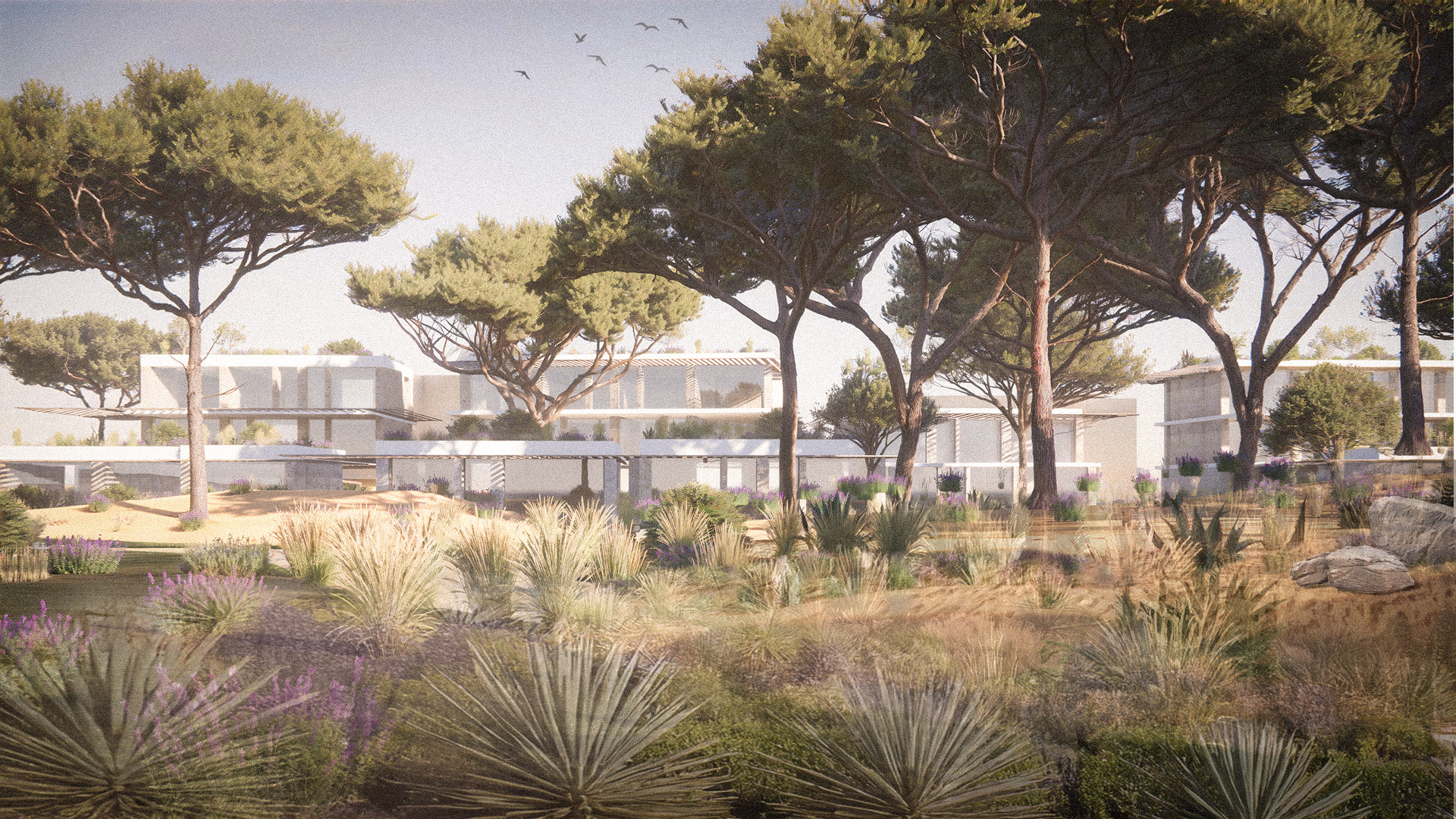
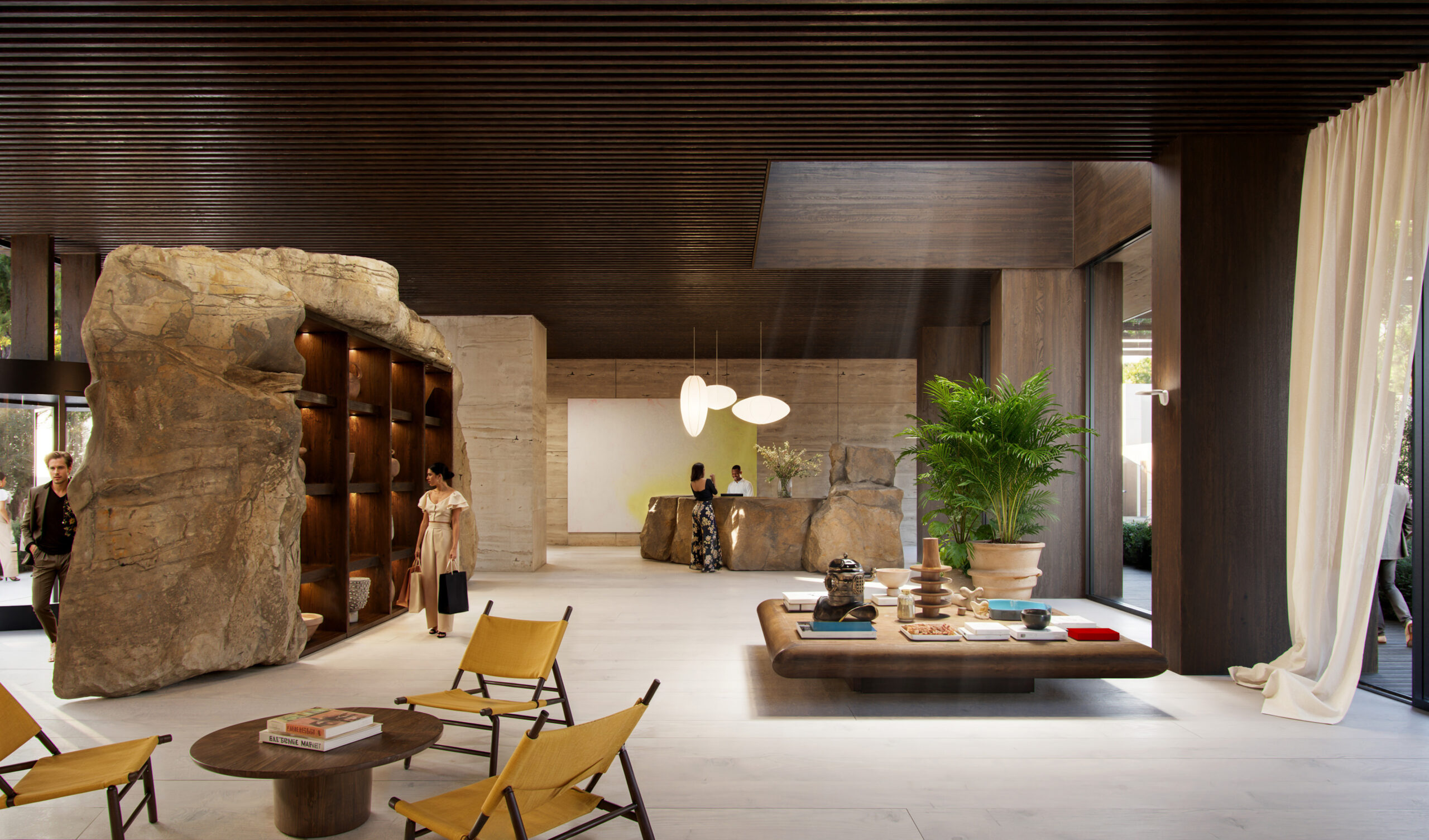
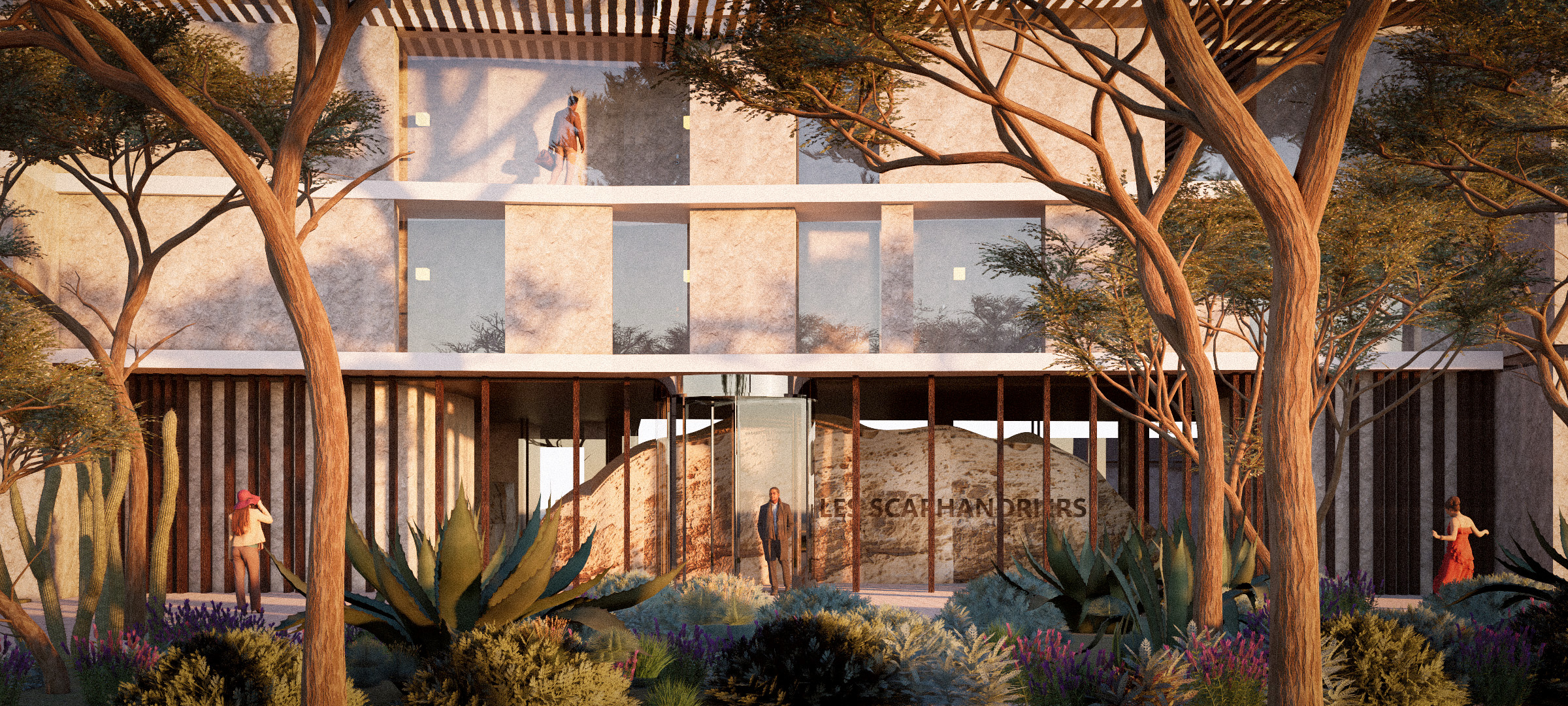
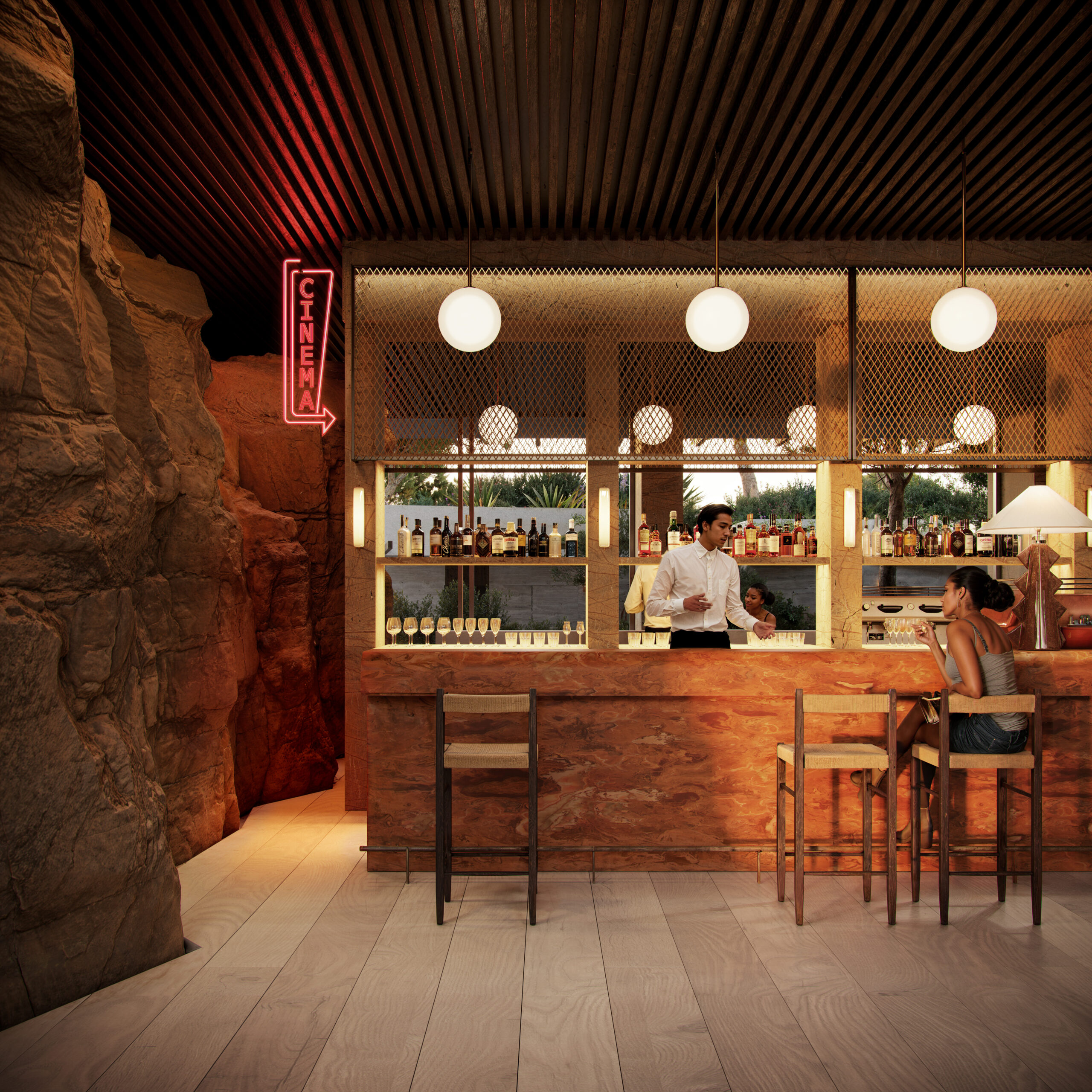
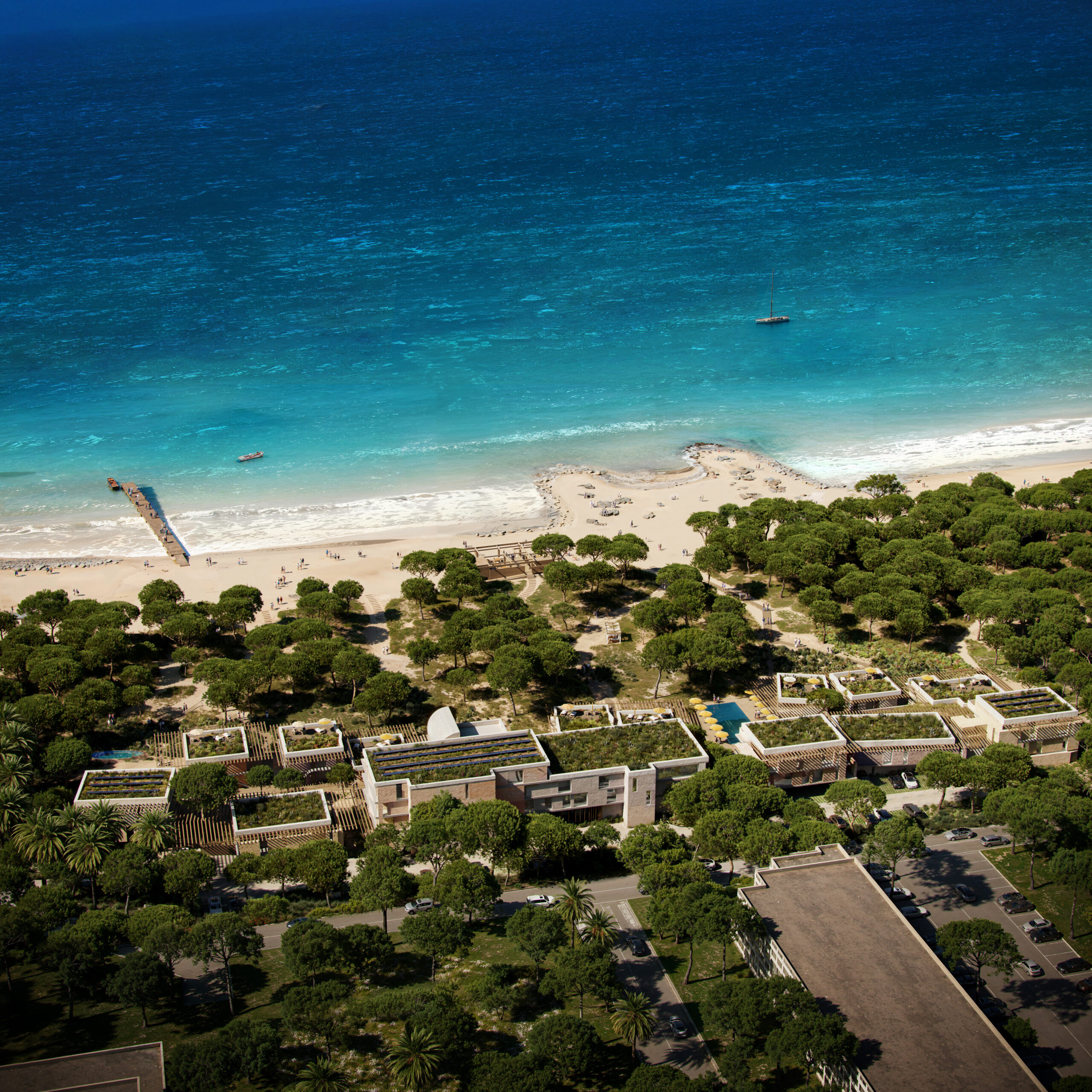
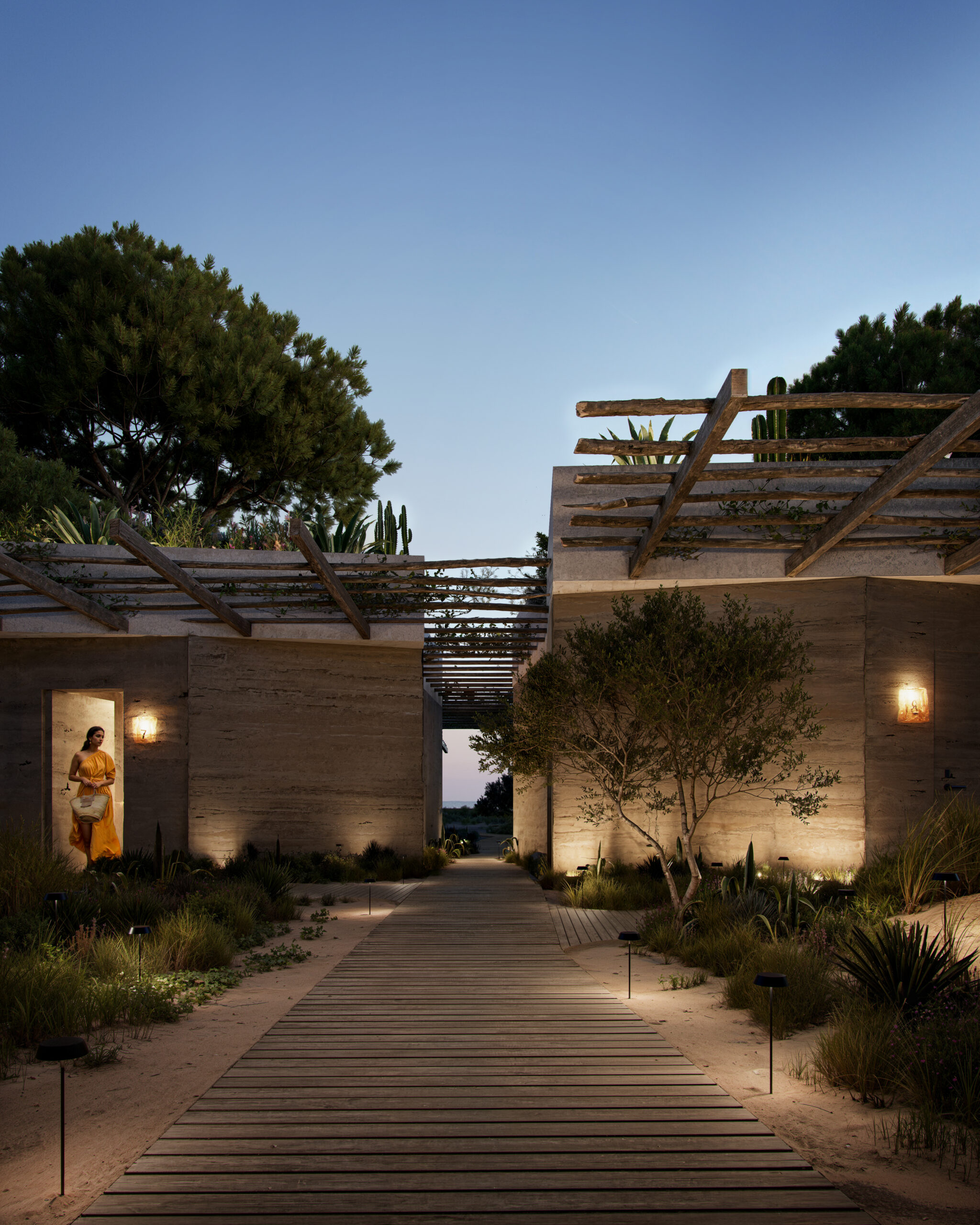
Les Scaphandriers is conceived as a hotel that grows out of its landscape rather than being placed upon it. Located at the edge of the Base Nature and the Mediterranean coastline in Fréjus, the project transforms a former municipal service site into a low-rise constellation of buildings and pavilions embedded within dunes, pine groves and coastal vegetation. The name pays tribute to the historic scaphandriers – the professional divers who once worked these waters – and anchors the hotel in the maritime memory of the place.
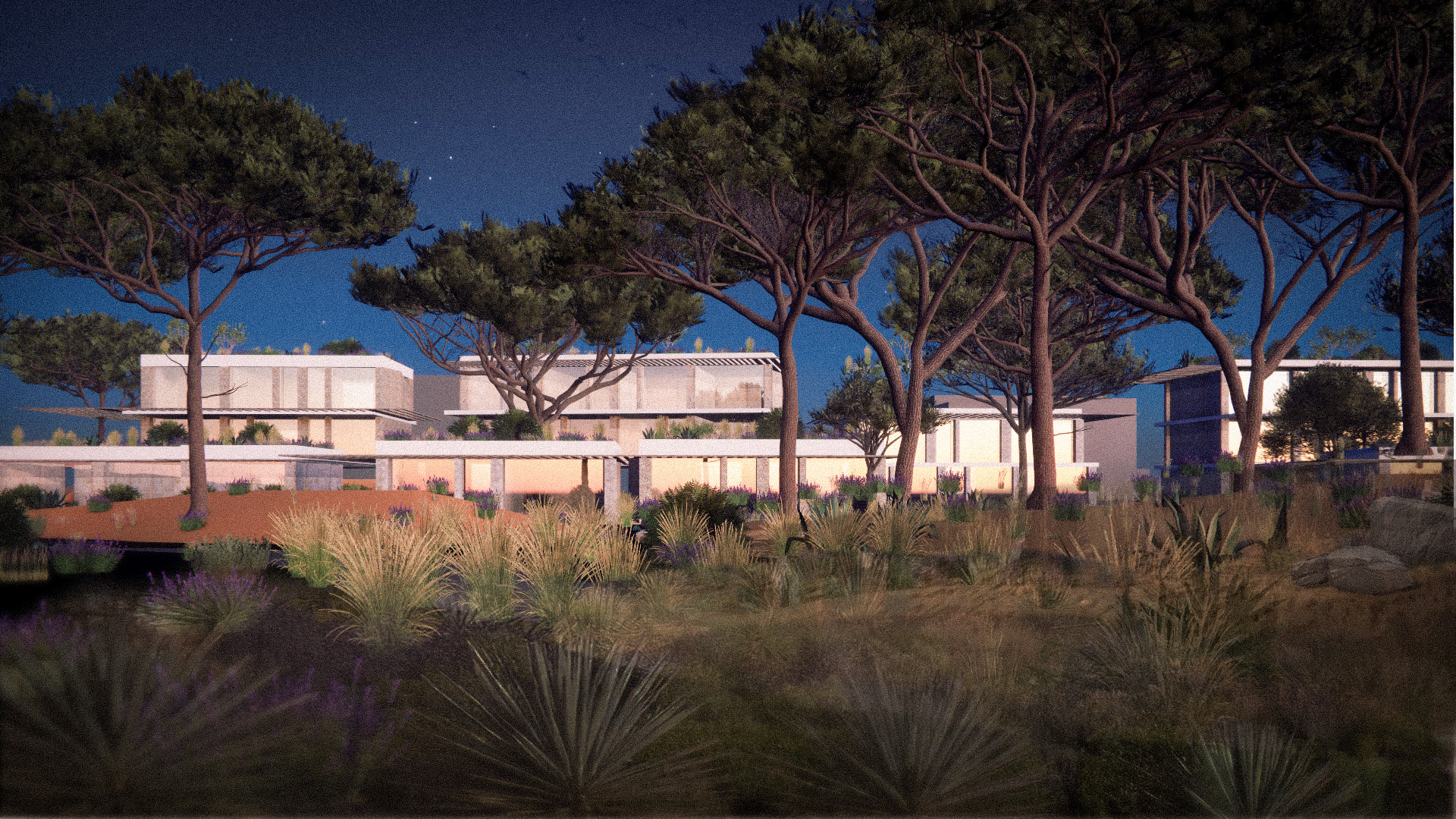
Our competition entry is guided by the idea of terroir: architecture as a product of its specific soil, climate, culture and patterns of use. Rather than introducing a singular object or iconic form, the hotel is composed as a small “village” of volumes that follow the natural topography, preserving open dunes and ecological corridors. Green roofs, native planting and sandy reliefs merge the architecture with the surrounding parkland, allowing nature to flow through the site and softening the transition between city and sea.
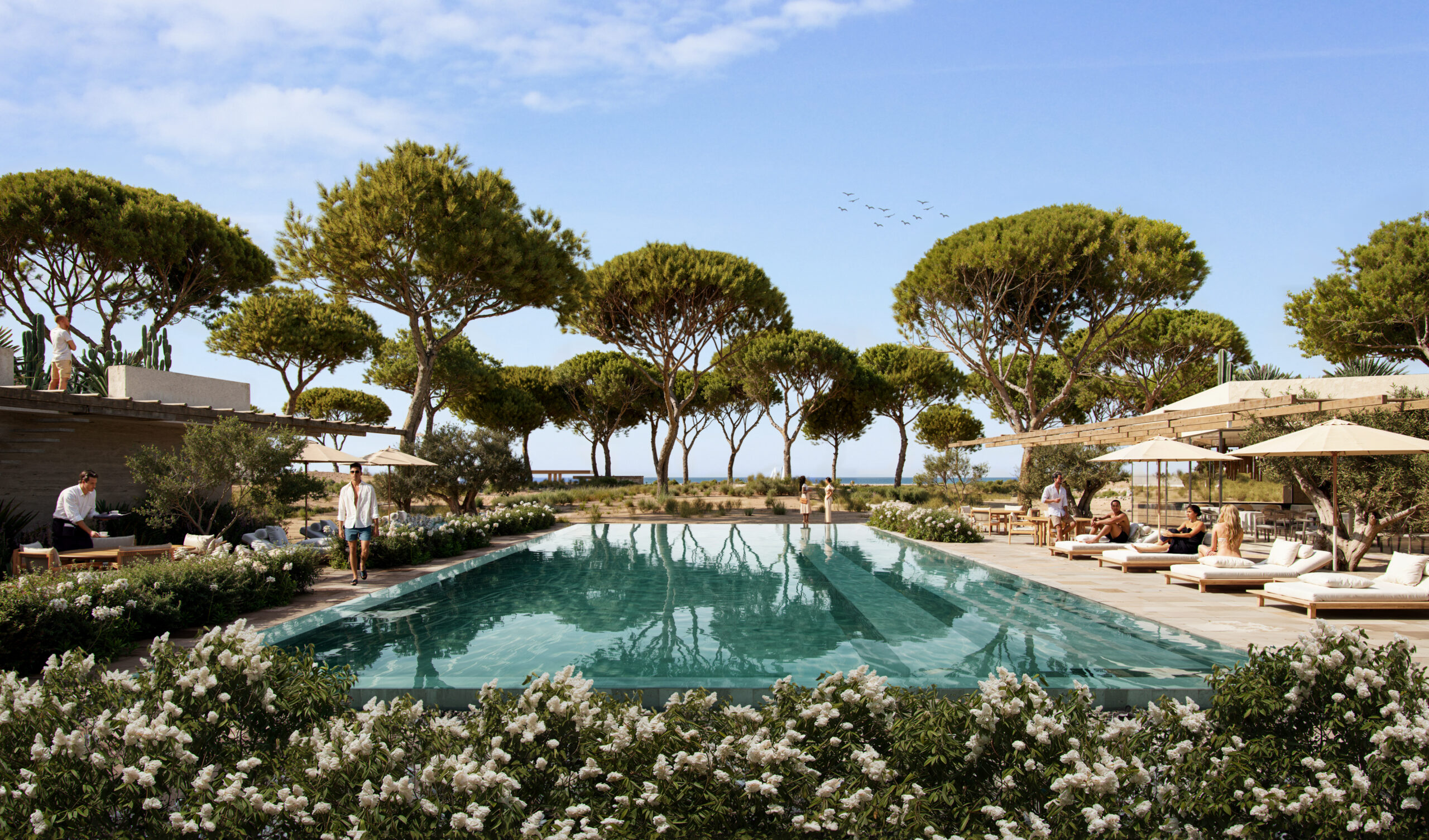
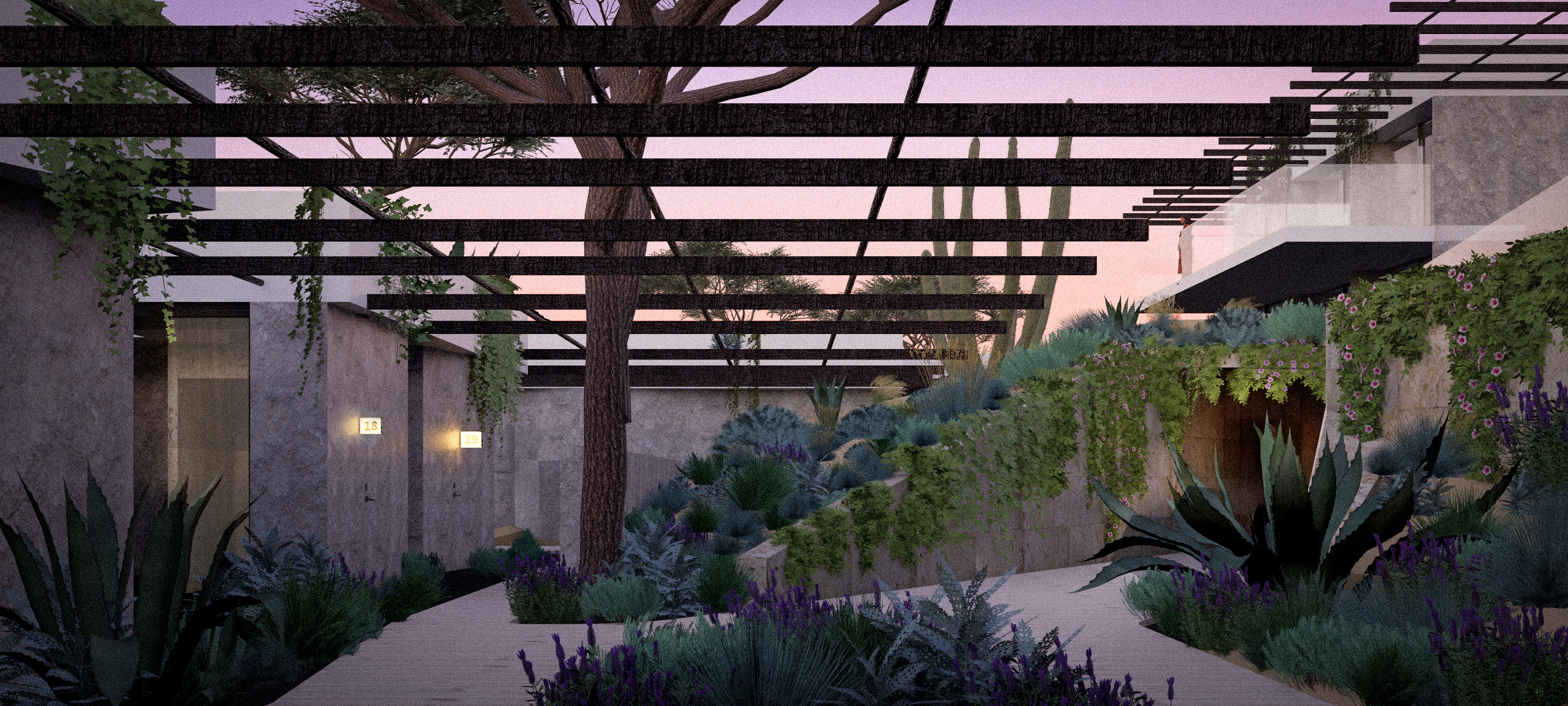
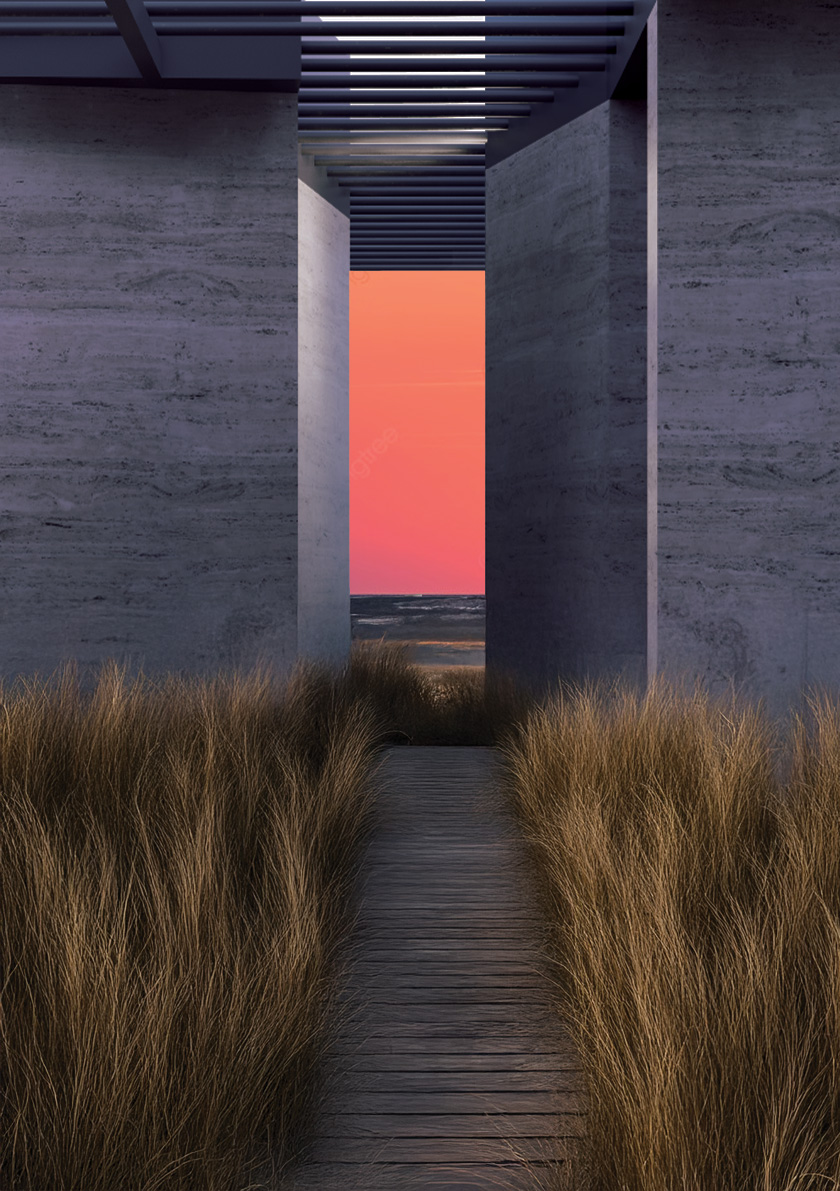
Landscape and architecture operate as one continuous system. Subtle height differences create sheltered terraces and microclimates; shaded paths connect the boulevard, the Base Nature and the beach; views are framed between volumes to reveal the sea. Public and semi-public functions – wellness, restaurant, bar, workshops and seasonal outdoor activities – are dispersed across the grounds, encouraging slow exploration and a direct engagement with the environment.
Sustainability is approached holistically. Existing structures and infrastructures are reused where possible, materials are locally sourced and demountable, and bioclimatic principles reduce energy demand. Solar panels, canopies, green roofs and water retention within the dunes contribute to resilience against heat and heavy rainfall, while native biodiversity is actively reinforced. Comfort is passively achieved through natural shade, filtered light, ventilation and tactile materials that create a sensory connection to the landscape.
Les Scaphandriers does not propose an isolated resort, but an open, place-based destination. It offers guests an immersive experience of the Côte d’Azur: a stay defined by dunes, wind, vegetation and sea. Here, architecture becomes part of the landscape—quiet, contextual and enduring—allowing the spirit of the coast to shape both space and experience.